
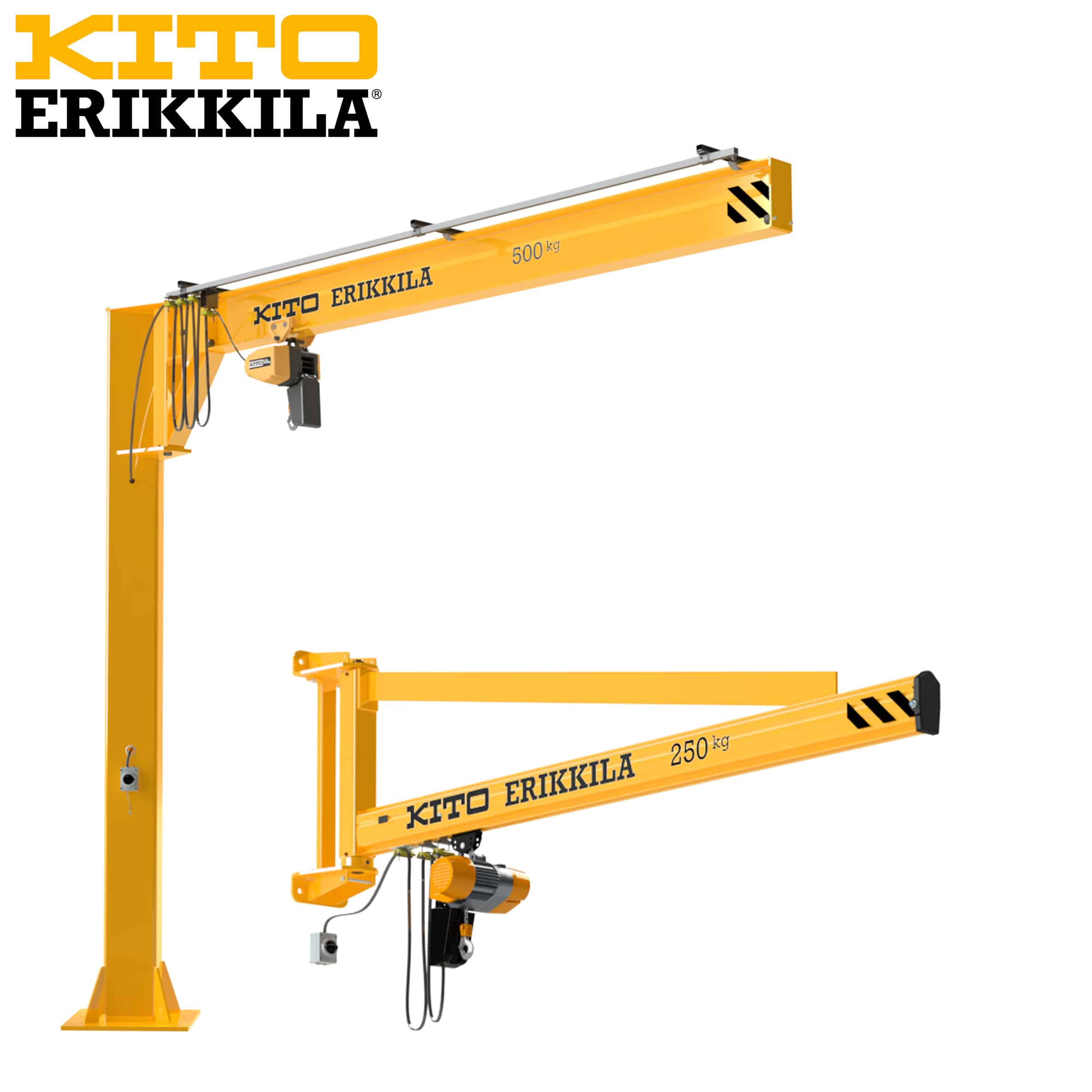
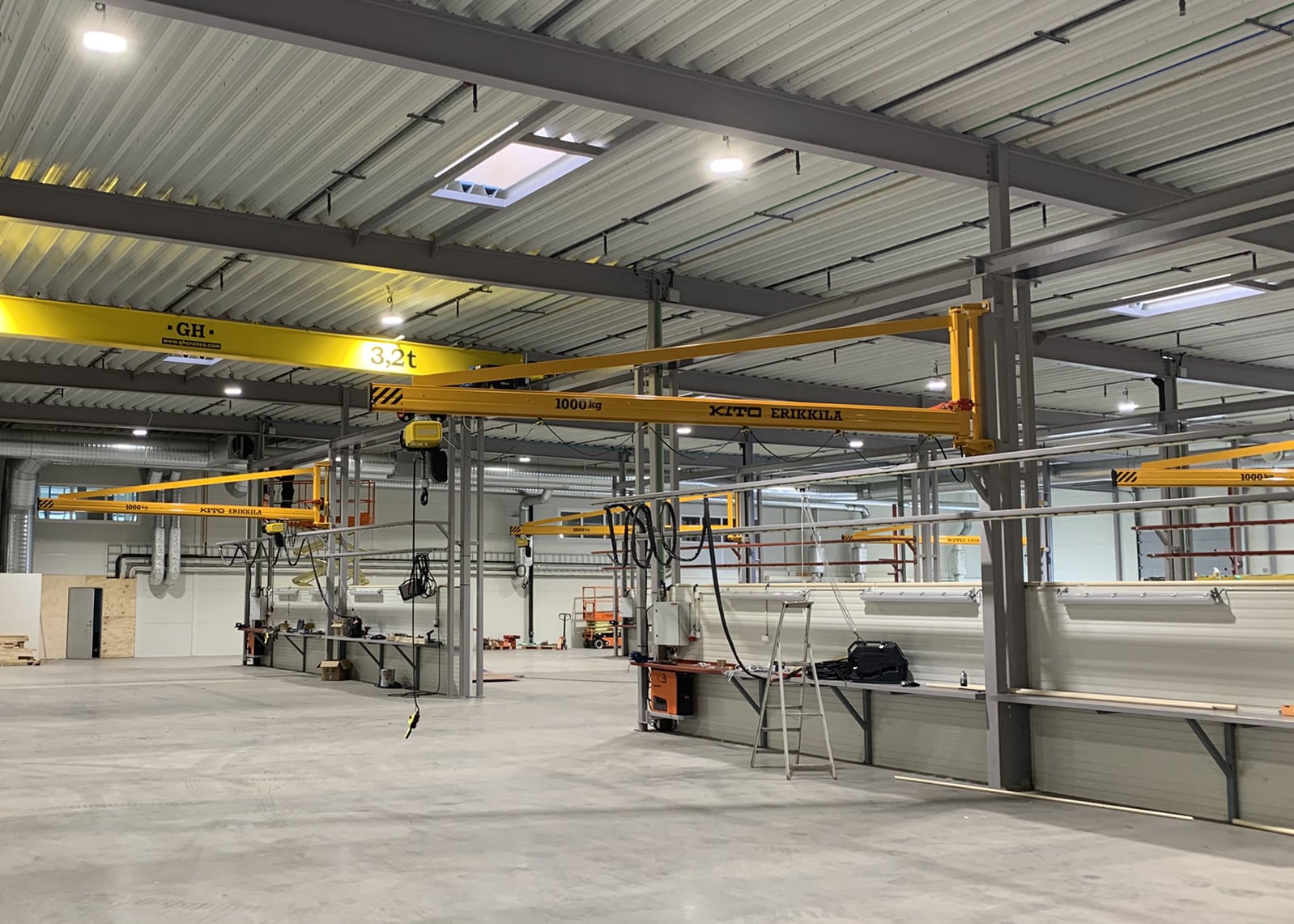
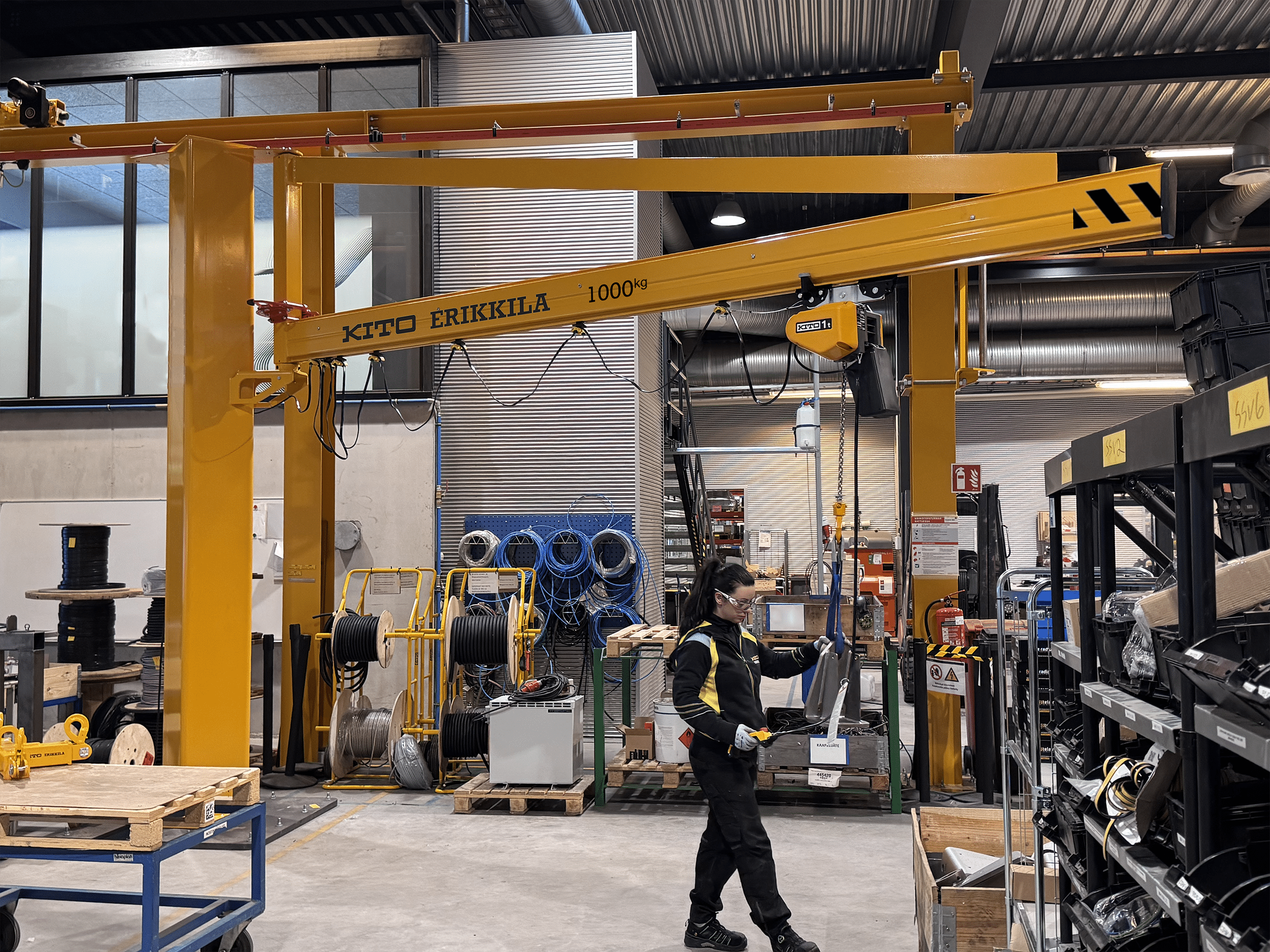
When a load needs to move repeatedly around one workstation, a Kito Erikkila jib crane puts the lifting equipment where the work happens. The jib swings across the work area, while a trolley carries the hoist along the beam. An operator can lift a load, move it horizontally and position it at the next step without taking it through the whole production hall.
The range includes wall-mounted jib cranes and column-mounted jib cranes. Wall mounting keeps the floor clear beside the station; a floor-mounted column provides a separate support where that layout is more suitable. Standard wall installations typically offer a 180° slewing angle, while column models can reach 270°.
Steel and aluminium profiles, low-headroom versions and manual or electric chain hoists allow the crane to be specified for different tasks. A low-resistance trolley makes movement along the jib easier. An internal conductor rail is available with compatible profiles. Select the mounting arrangement, load capacity, reach and hoist together for the intended workstation.
This product is available by request only—ask us for a quote!
"*" indicates required fields
A Kito Erikkila jib crane gives the operator a defined lifting area at the workstation. The hoist raises and lowers the load, the trolley moves along the jib, and the jib rotates to bring the load across the working area. These cranes suit production, assembly and maintenance points where lifting is concentrated in one place but the load has to move in more than one direction. They can also serve a station beneath an existing overhead crane when local lifting is needed.
A wall-mounted jib crane attaches to a suitable wall or vertical support near the work area. Because its support is above the floor, the space directly beneath the mount remains available for equipment and movement. It is a practical layout when the lifting task sits beside a structural wall or pillar. The mounting structure and installation height need to be assessed for the chosen crane and load.
A column-mounted jib crane is fixed to the floor on its own upright. This places the slewing point at the workstation without relying on a nearby wall. It can suit a more open area or a task where the required reach is better served from a floor-mounted point. The column, base and floor installation must suit the load and available space. Confirm the supporting structure and clearances before specifying either arrangement.
The jib’s rotation determines how much of the area around its mounting point the crane can cover. A wall-mounted jib crane typically sweeps through 180°. A standard column-mounted arrangement can reach 270°. Depending on the mounting position, a wall jib installed on a narrow pillar may also have a wider arc.
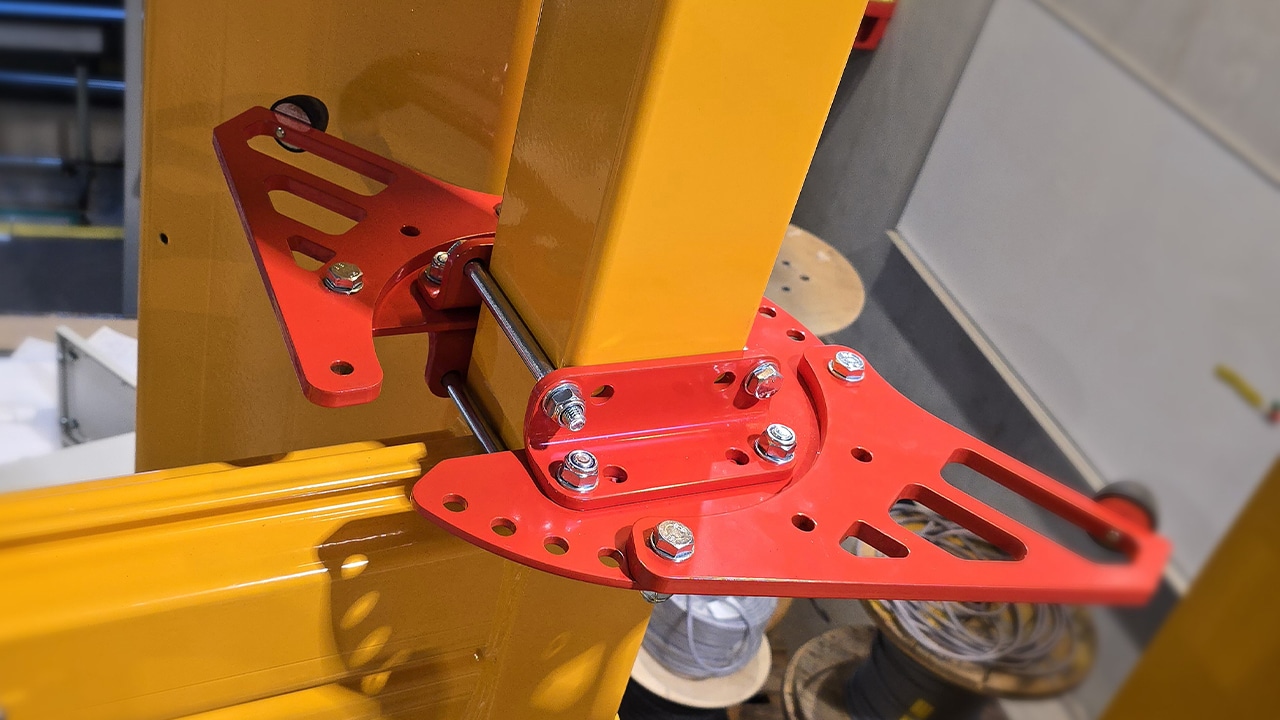
Where the arm must stop before a wall, machine or other part of the station, an optional slewing limiter can define its permitted movement. This is useful when the crane serves a specific part of a line and a full sweep is unnecessary. Plan the area around both the pickup point and the load’s path. The useful lifting area is the space where the jib and trolley can actually place the hook.
Kito Erikkila jib cranes use steel or aluminium profiles according to the selected configuration. The profile influences the crane’s rated load, beam size and the way the trolley travels. Aluminium can be useful where a lighter moving structure is preferred. Steel profiles provide options for higher loads. Choose the material together with the required capacity and jib reach.
A suitable RAL colour can be discussed for a painted configuration. This can help the crane fit an existing plant colour scheme.
The trolley takes the hoist along the jib, adding straight-line movement to the crane’s rotation. Erikkila’s low rolling-resistance trolleys are designed to move smoothly within the profile. This matters during repeated positioning, especially when the operator has to align a suspended part at a bench or machine. The usable trolley travel also depends on the chosen hoist and power supply arrangement.
Not every workstation has generous clearance above the load. Low-headroom jib cranes are available in wall-mounted and column-mounted versions for areas where the height of the building or nearby structures limits a standard arrangement. The intention is to preserve useful lifting height within the available space.

Storage and shop furniture
The furnishing concept of Motonet's headquarters and Finland's largest automotive accessories store is practical and durable.

Shelving, Racking and Forklifts
The forklift, automated storage, and furniture solutions for Orion's pharmaceutical packaging and logistics facility in Salo were customized specifically to meet the customer’s needs.

Archive and storage shelving
The University of Turku Library has been modernized, including its material storage facilities
Tuijussuontie 6
21280 Raisio, FINLAND
View on map »
